Strength training 2 days a week: a realistic foundation for long-term health
You don’t need a perfect 5-day plan to improve. Two well-designed strength sessions per week can give you a sustainable base of health and energy.
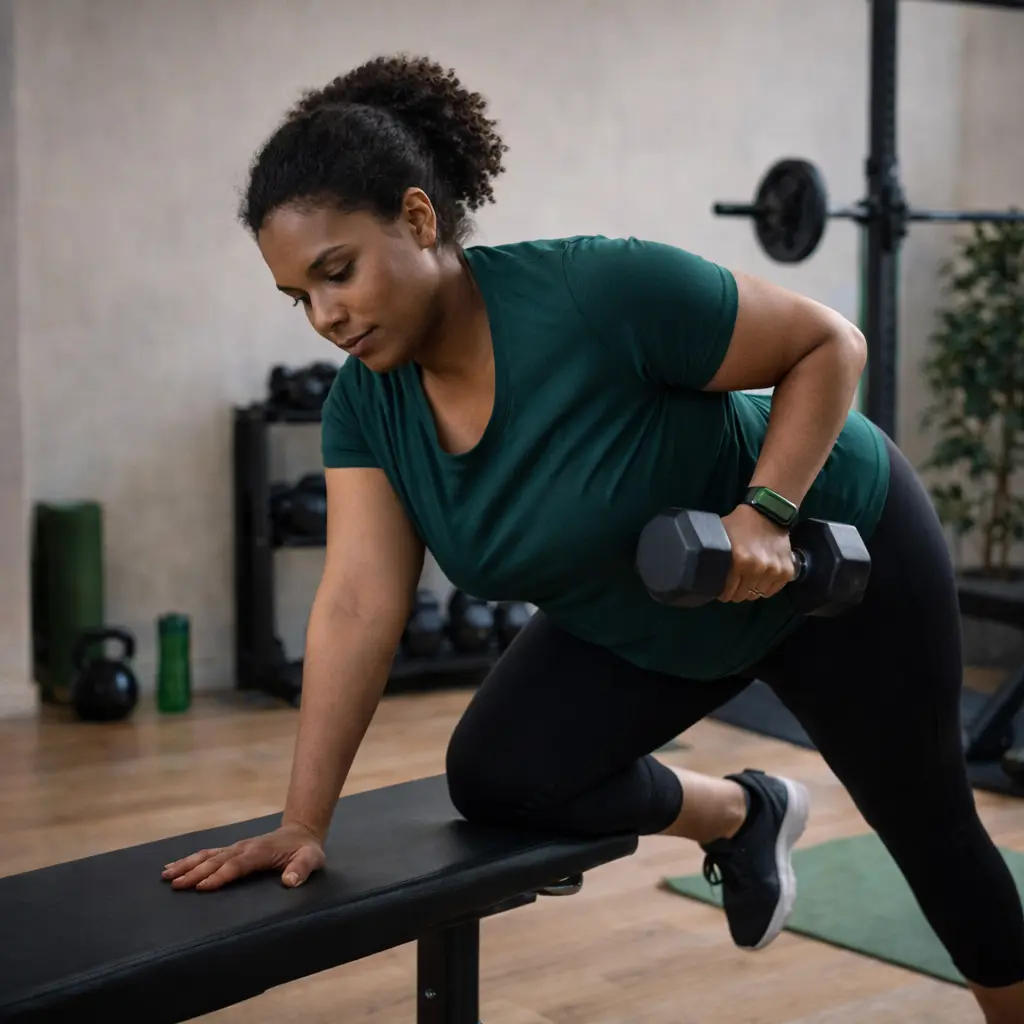
Many people want to add strength training to their lives, but when they look for a starting point they find complex programmes, long sessions, and the idea that “if I don’t train four or five days, it’s pointless”.
That is often where things go wrong.
Not because motivation is missing, but because the plan doesn’t fit normal life. Work, family, commuting, fatigue, surprises. If the routine is fragile, it won’t last.
That is why a humbler approach is often far more useful: strength training two days per week.
It may not be the flashiest option. For many people, it is the one they can actually sustain. And in health, sustainability usually wins.
Why starting with an impossible ideal backfires
Beginners often copy advanced versions: too many exercises, too many sessions, too much intensity.
The cost is predictable:
- early physical and mental fatigue,
- feeling constantly behind,
- and every difficult week feeling “ruined”.
People don’t quit because strength training doesn’t work. They quit because the initial format was too hard to maintain.
At Habituae, we come back to the same principle: consistency matters more than isolated intensity.
Why two days can be enough
Strength training doesn’t require perfection to deliver benefits. It requires reasonable repetition over time.
With two days per week, you can:
- train the main movement patterns,
- improve coordination and body control,
- keep a sustainable minimum dose,
- and build a routine that survives real weeks.
There is also a psychological gain: when the goal is feasible, you complete it more often. Each completion reinforces identity: “I’m someone who does strength training, even if it isn’t perfect.”
A simple 2-day structure
Day A
- Push movement (e.g. incline press-up or dumbbell press)
- Knee-dominant leg movement (squat variation)
- Pull movement (row with band or dumbbell)
- Basic core (plank or anti-rotation)
Day B
- Hip hinge (Romanian deadlift with dumbbell or backpack)
- Unilateral leg movement (lunge or step-up)
- Alternate push variation
- Complementary pull + core
You don’t need many exercises. You need clear basics, repeated with good form.
Session length and progression
For a sustainable base, 30 to 45 minutes per session is usually enough.
If one day you only have 20 minutes, it still counts. Keep three main exercises and protect continuity.
Progress doesn’t mean doing more all the time. It means small, manageable changes:
- one or two extra reps,
- better technique,
- slight load increase,
- or slightly shorter rests.
Real obstacles, realistic responses
“I don’t have time this week”
Don’t cancel everything. Keep one full session and one short 15–20 minute version.
“I missed several days”
You don’t need a full reset. Restart with a lighter session at the next opportunity.
“It feels like too little”
At first, that feeling is normal. But little and sustained usually beats a lot and intermittent.
4-week starter template
Week 1
- 2 sessions of 30 minutes
- Comfortable load, focus on technique
Week 2
- Keep 2 sessions
- Add one small improvement (e.g. one extra rep in 1–2 exercises)
Week 3
- Maintain frequency
- Review energy, form and adherence
Week 4
- Keep structure
- Adjust only what you need to keep it sustainable
Closing
If a complex routine feels unrealistic right now, that’s fine. You don’t need to start at the top.
Start with a version that fits your real week.
Two strength sessions may look modest from the outside, but they can mean a lot in practice: more stability, more confidence, and more continuity.